Ben Stokes Returns to Action in May After Severe Cheekbone Injury
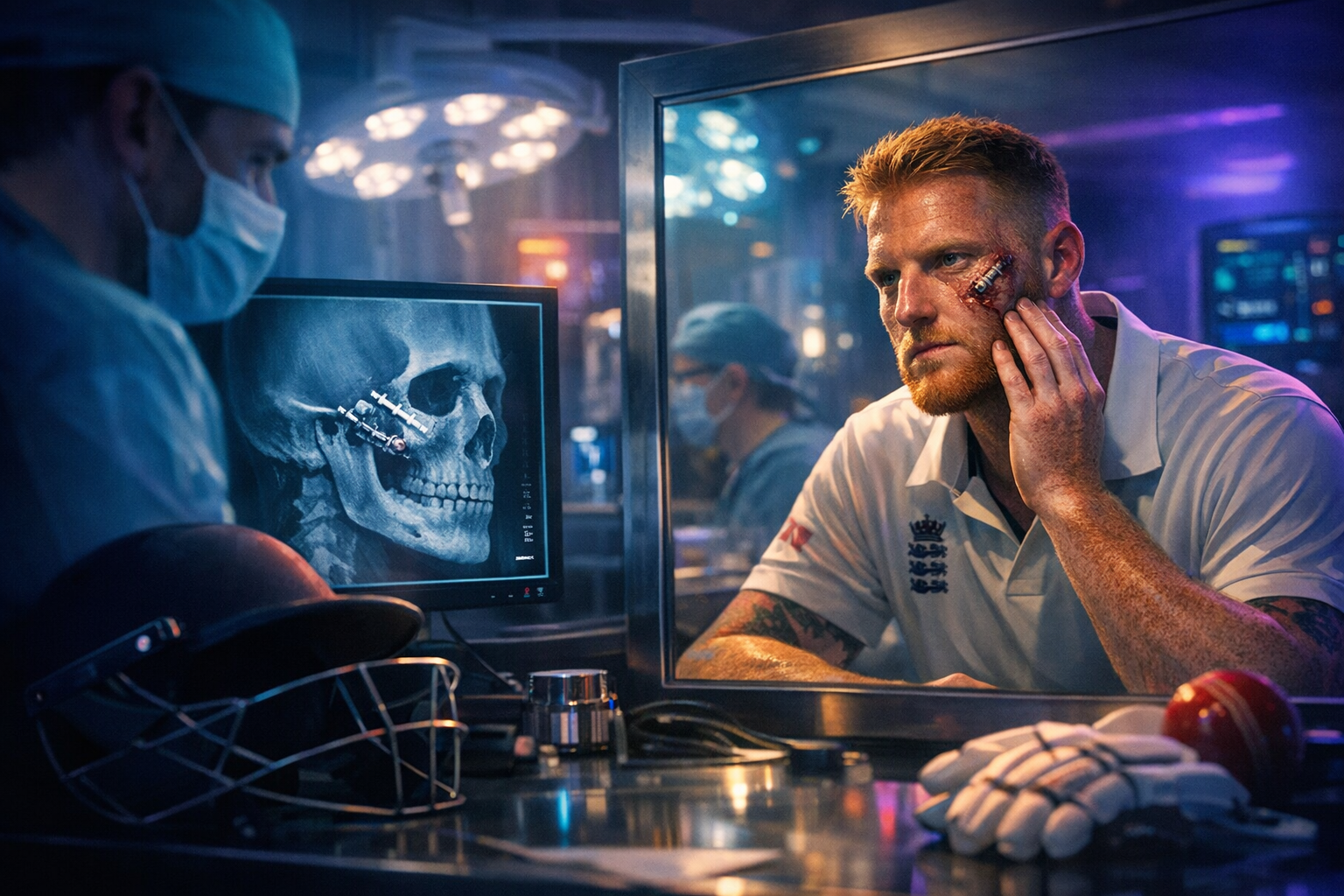
Ben Stokes, England's Test captain, has been sidelined for months following a severe cheekbone fracture sustained during a coaching session in February 2026. A hard-struck delivery hit his face, requiring multiple surgeries and ongoing recovery that has kept him out of domestic competition. His confirmed return in May positions him to regain match readiness ahead of critical international commitments in the World Test Championship cycle.
Injury Origins and Medical Demands
The incident occurred while Stokes coached young players at an academy, where an errant delivery delivered a forceful blow to his cheekbone. Such facial trauma often results from high-velocity impacts common in training environments, fracturing the zygomatic bone and potentially displacing surrounding structures. He underwent several surgical interventions to stabilize the area, repair damage, and prevent complications like nerve impairment or chronic pain, reflecting the complexity of midfacial reconstructions.
Recovery Process and Setbacks
Post-surgery recovery from cheekbone fractures demands careful progression: initial immobilization gives way to gradual loading to rebuild bone density and soft tissue resilience. Stokes described the injury as life-threatening, underscoring risks such as internal bleeding, infection, or airway compromise that elevate these cases beyond routine fractures. His absence from the County Championship stems from this phased rehabilitation, prioritizing full structural integrity before resuming high-impact duties.
Strategic Timing for Leadership Role
England's upcoming Test fixtures carry weight in the World Test Championship, where consistent leadership proves essential for campaign success. Stokes's May reentry allows time to rebuild physical conditioning and decision-making sharpness through domestic appearances, aligning with protocols that emphasize progressive exposure post-injury. This approach mitigates reinjury risks, ensuring his presence bolsters team dynamics during pivotal phases of the cycle.
Broader Lessons on Coaching Hazards
Incidents like Stokes's highlight vulnerabilities in coaching settings, where protective gear often lags behind participant speeds. General trends in injury prevention advocate reinforced helmets, proximity controls, and simulation tools to reduce direct hits. His recovery trajectory offers a case study in resilience, signaling optimism for sustained performance while fans anticipate his influence in his preferred long-form format.